Cardio doesn't build bone.
If you've been walking, running or riding to protect your skeleton, I understand the frustration when the scans don't move. Steady-state cardio is good for a long list of things. Loading your bones isn't one of them.
Bone responds to force. Heavy, progressive, repeated force. That's the whole mechanism, and almost everything else people are told about bone health is a distraction from it.
Why bone needs load, not effort
Your skeleton is living tissue. It remodels continuously, and it adapts to what you ask of it — the same way muscle does. The signal it responds to is mechanical strain: force transmitted through the bone hard enough that the tissue reads it as a demand it isn't currently built for.
Walking transmits roughly your body weight. So does a second hour of walking. Your bones already handle your body weight every day, which means they have no particular reason to build more of themselves to cope with it.
A loaded barbell is a different conversation entirely.
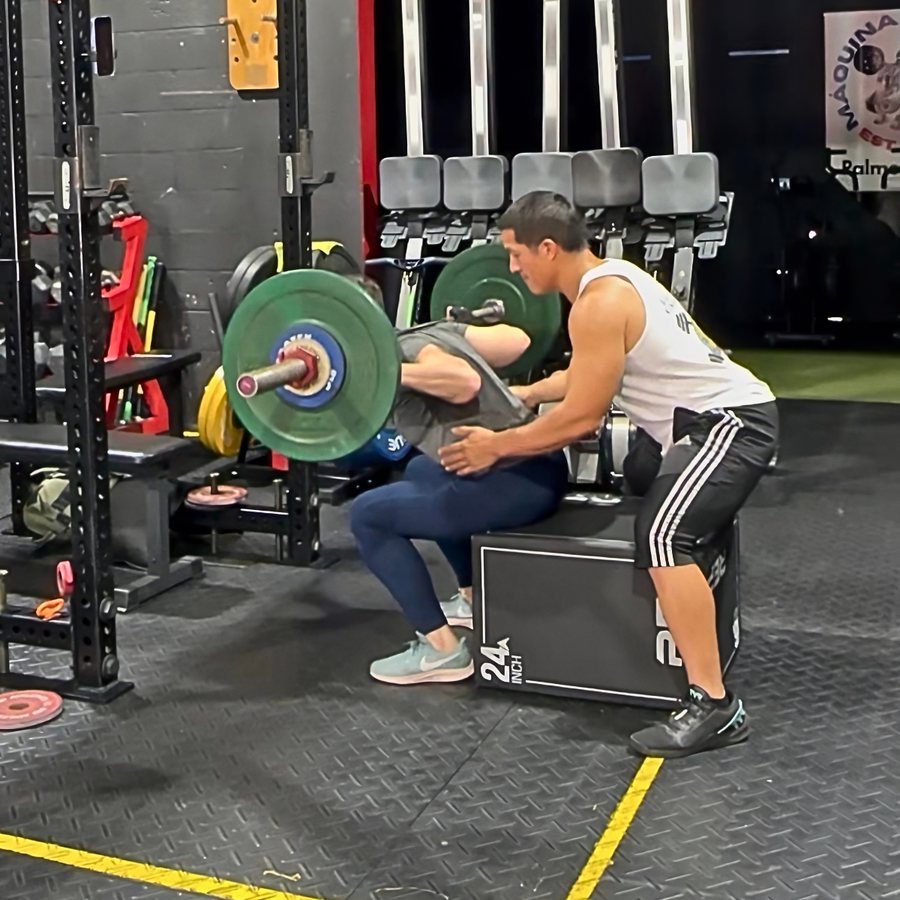
What "heavy" actually means
Not five-pound dumbbells. Not a circuit labeled HIIT. Not a resistance band.
I mean a loaded barbell on your back. Deadlifts that are genuinely heavy for you. Weight that takes two to three minutes of rest before you can repeat it — because if you're ready to go again in forty seconds, it wasn't heavy.
That last part is the one almost everyone skips. Rest periods aren't downtime between the real work. They're what makes the next set heavy enough to count. Cut the rest and you've quietly converted a strength session into a conditioning session that happens to involve weights.
Getting tired is not the same as getting stronger
You can run a marathon at a punishing pace, finish completely wrecked, and give your skeleton almost no reason to change.
Hard is not the same as effective. Fatigue is a sensation. Adaptation is a specific response to a specific stimulus, and for bone that stimulus is load — not sweat, not heart rate, not how destroyed you feel afterward.
This is the single most common mistake I see in people who are genuinely trying. They're working hard. They're just working hard at something that doesn't ask anything of their bones.
What it looks like in practice
A session that loads bone has a recognizable shape:
- A main barbell lift. Squat, deadlift, press or bench. Heavy for you, with long rest between sets.
- Enough rest to stay heavy. Two to three minutes on the main lift. Not negotiable.
- Progression you can see. Last week's numbers written down, this week's built from them. Bone adapts to increasing demand, which means the demand has to actually increase.
- Consistency over months, not weeks. Bone remodels slowly. Scans are typically repeated at twelve-month intervals for a reason.
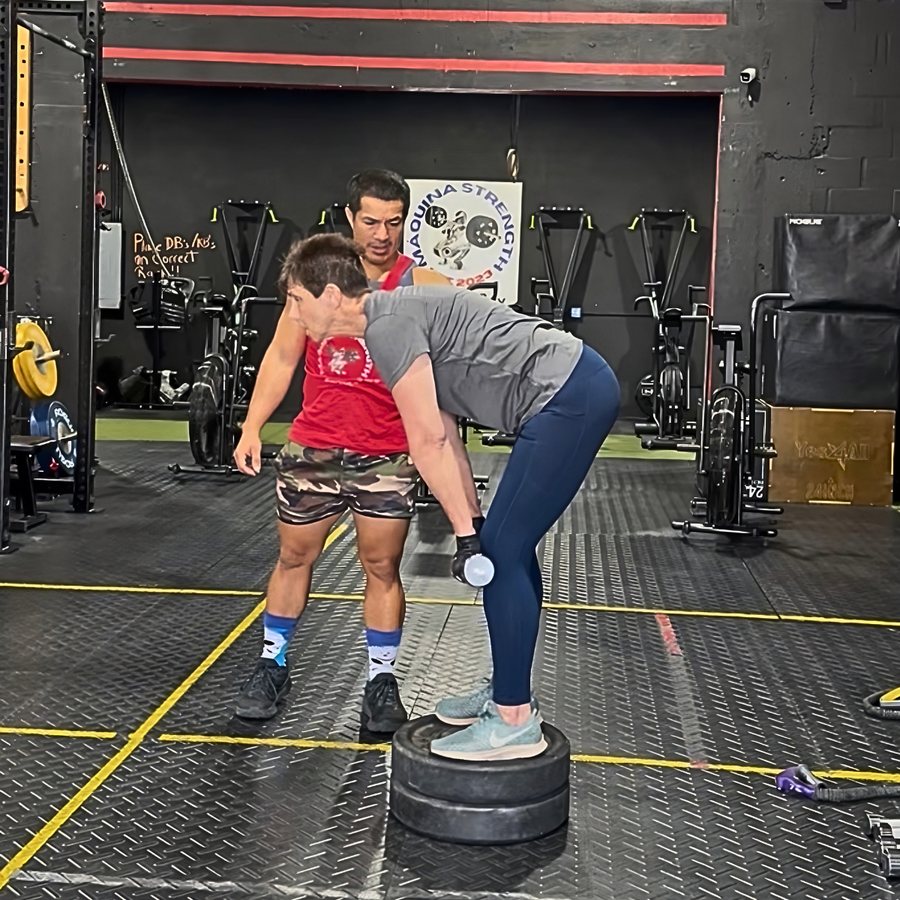
Everything else — the machine work, the dumbbells, the conditioning — has its own value. It just isn't what's moving the number on your scan.
What two years looked like for one client
A 66-year-old client of mine is under medical treatment for osteoporosis. A year into that treatment she added serious strength training with me.
Over the two years since, her bone density improved at every measured site. Her left femoral neck moved out of the osteoporosis range entirely and into osteopenia. Her spine improved substantially and is now close to the normal range.
Being straight about what that means. She was on medication the whole time, and osteoporosis drugs produce real gains on their own. I'm not claiming the barbell did this by itself — that would be a lie, and anyone who knows this field would spot it.
What I'm claiming is narrower and still worth your attention: she did the medical part and the loading part, and every site improved. Most people only ever do the first one.
Treatment and training aren't competing options. The medication changes how bone is remodeled. Loading tells it where strength is needed. They do different jobs.
If you have a diagnosis
This matters, so read it properly. If you've been diagnosed with osteoporosis or osteopenia, talk to your doctor before starting heavy barbell work — not as a formality, but because the answer genuinely depends on your numbers.
Severe bone loss carries real fracture risk, and loaded spinal flexion in particular is contraindicated for some people. Which lifts are appropriate, and at what load, is an individual question that needs your actual scan results and someone qualified looking at them.
If that's your situation, you want supervised in-person coaching with your results in hand. Not a program you downloaded, and not an article.
If you're training for bone health, not treating a diagnosis
Most people reading this aren't in that category. You're in your forties, fifties or sixties, your numbers are fine or borderline, and you'd like to keep them that way.
For you the answer is simple and slightly inconvenient: get under a barbell, get strong over a period of years, and write down what you lifted so next week can be harder than this one.
I've written the longer version of that up separately — what strength training for women over 50 actually involves, what changes after fifty and what doesn't.
That's the online strength training program I run at my gym and have now opened up — a main barbell lift every session, programmed rest periods, loads carried forward from what you logged last week, and six-week cycles so progress doesn't stall.
Train the way bone actually responds to
The same programming my members run in Palmetto Bay, built to work at any gym with a barbell and a rack.
See the program → First month free. $54/month after, billed $27 every 2 weeks.This article is general information about exercise and bone health. It isn't medical advice, and it isn't a substitute for your doctor's assessment of your own results.